


Independent Research. Scientific Collaboration. Practical Environmental Solutions.
EEESEF supports the coordination of scientific fieldwork, applied environmental research, and technical investigations through cooperation with universities, research institutions, industry partners, and qualified specialists. Our objective is to facilitate credible scientific evaluation, encourage knowledge exchange, and contribute to practical solutions for environmental and sustainability challenges.
Activities may include coordinating research discussions, developing study frameworks, facilitating access to relevant expertise, and supporting the independent evaluation of environmental technologies and industrial processes. Each initiative is considered according to its scientific relevance, available resources, institutional partnerships, and agreed scope.
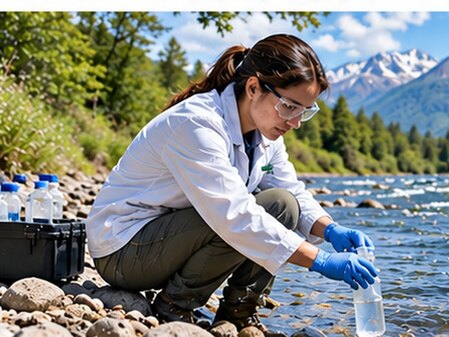
EEESEF promotes collaborative, evidence-based scientific research that connects academic knowledge with practical environmental and industrial challenges.
Our role is to help identify research needs, bring together appropriate institutional and technical participants, and coordinate the development of scientifically meaningful investigations.
Depending on the project, this may involve cooperation with universities, independent laboratories, researchers, technology developers, and organisations seeking objective evaluation of environmental performance or technical feasibility.
EEESEF emphasises scientific independence, transparent methodology, responsible data handling, and clear communication of research findings and limitations.
Research activities are designed around the requirements of each project, and any laboratory testing, field measurements, or specialist investigations are undertaken by appropriately qualified participants under separately agreed arrangements.
Environmental Monitoring and Assessment
Scientific investigations involving water quality, soil conditions, air emissions, pollution prevention, environmental impacts, and relevant monitoring practices.
Water and Wastewater Technologies
Research coordination relating to industrial water treatment, wastewater management, contaminant removal, water reuse, and emerging environmental technologies.
Industrial Processes and Resource Efficiency
Applied research concerning industrial environmental performance, resource recovery, waste reduction, process efficiency, and responsible materials management.
Energy and Environmental Technologies
Scientific cooperation involving energy efficiency, emissions reduction, carbon management, environmental technologies, and sustainable industrial development.
Scientific Validation and Technical Evaluation
Coordination of independent testing, experimental studies, pilot-scale investigations, and technical reviews intended to assess the performance or suitability of proposed technologies.
The precise research areas and methods are determined by the scientific objectives, available expertise, institutional arrangements, and requirements of each initiative.
1. Initial Consultation and Research Identification
EEESEF discusses the proposed environmental or technical challenge with the interested organisation or institution.
The initial discussion identifies the research question, potential scientific value, relevant participants, and preliminary scope.
2. Institutional Cooperation Framework
Where appropriate, EEESEF facilitates cooperation through a non-binding Memorandum of Understanding (MOU) or another suitable institutional arrangement.
Such arrangements establish a basis for scientific dialogue and potential collaboration without automatically creating financial or operational obligations.
3. Research Scope and Methodology
Participating organisations work to define the research objectives, proposed methodology, responsibilities, information requirements, expected outputs, and practical limitations.
The research framework may identify requirements for laboratory testing, field sampling, technical measurements, or specialist participation.
4. Coordination of Scientific Participants
EEESEF helps facilitate communication among relevant universities, researchers, laboratories, technology providers, and other qualified participants.
The roles and responsibilities of each participant are established according to the specific research arrangements.
5. Fieldwork, Testing, and Technical Investigation
Where applicable, qualified participants undertake agreed scientific activities, including field observations, sample collection, laboratory analysis, experimental testing, or technical evaluation.
All activities remain subject to applicable legal, safety, institutional, and operational requirements.
6. Scientific Review and Interpretation
Research findings are reviewed in the context of the agreed methodology, available evidence, technical limitations, and project objectives.
Where results are preliminary or require further verification, those limitations are clearly identified.
7. Research Reporting and Knowledge Exchange
Depending on the initiative, participating institutions may prepare technical findings, research summaries, scientific papers, recommendations, or proposals for further investigation.
Publication, confidentiality, intellectual property, and use of research results are addressed through the relevant cooperation arrangements.
Scientific fieldwork and research coordination may contribute to a range of outputs, depending on the nature and maturity of the project.
These may include:
Research findings are evidence-dependent. EEESEF does not guarantee that an investigated technology will achieve a particular performance level or that a proposed project will prove technically or commercially feasible.
EEESEF supports research activities conducted according to principles of scientific objectivity, professional integrity, and transparent reporting.
Scientific conclusions should reflect the evidence available rather than the commercial interests or expectations of participating organisations.
Where EEESEF coordinates research involving technology developers or industrial partners, the respective responsibilities of research institutions, technical specialists, and participating companies should remain clearly defined.
Preliminary findings, laboratory observations, and pilot results must not be presented as independently verified industrial performance unless the evidence supports such conclusions.
EEESEF acts primarily as a scientific cooperation and research coordination organisation.
It does not automatically serve as the laboratory operator, engineering contractor, environmental permit holder, technology supplier, or commercial project developer for initiatives in which it participates.
Universities, laboratories, technology providers, and other participating organisations retain responsibility for their own professional activities, technical methods, safety procedures, and contractual obligations.
Where research requires specialist services, external expenditure, or formal project commitments, these matters are addressed through appropriate separate arrangements before work begins.
EEESEF undertakes its scientific cooperation activities in furtherance of its non-profit objectives, including environmental protection, scientific research, education, and international collaboration.
The Foundation may participate in research initiatives supported by institutional contributions, grants, donations, or other appropriate funding arrangements consistent with its governing objectives.
Where a proposed initiative involves external laboratory testing, fieldwork expenses, travel, specialist services, or other project costs, the relevant responsibilities and funding arrangements are discussed and agreed in advance.
EEESEF's participation in scientific coordination does not imply that third-party technical services or project expenses will be provided without charge.
Scientific fieldwork can support wider environmental and ESG objectives by providing technical evidence relevant to environmental performance, pollution prevention, resource management, and sustainable industrial practices.
Depending on the circumstances, research findings may help organisations identify environmental challenges, evaluate potential improvements, or develop a stronger evidence base for future decision-making.
Scientific research coordination remains distinct from EEESEF's Independent ESG Assessment and ECF-700:2026 Certification programmes. Participation in a research initiative does not automatically result in an ESG assessment rating or certification.
EEESEF welcomes enquiries from universities, research institutions, environmental technology developers, industrial organisations, public institutions, and other parties interested in scientifically relevant environmental investigations.
Potential cooperation may involve sectors such as water treatment, energy, mining, industrial manufacturing, infrastructure, waste management, environmental monitoring, and related technical fields.
Projects may be considered in the United Kingdom, Europe, Central Asia, China, Canada, and other regions, depending on institutional cooperation opportunities and available resources.
Organisations interested in scientific fieldwork coordination are invited to contact EEESEF with a brief description of the proposed research topic, environmental or technical challenge, intended objectives, and potential institutional participants.
EEESEF can review the initial concept, discuss possible cooperation arrangements, and consider whether the proposed initiative aligns with the Foundation's scientific and environmental objectives.